
What Makes a Watch Valuable? The Key Factors Every Collector Should Understand
Not every watch holds its value, and not every expensive watch deserves to. The difference between a timepiece that depreciates the moment it leaves the shop and one that commands a premium on the secondary market for decades comes down to a handful of well-understood watch value factors. Understanding what drives a watch's worth, whether you are buying, selling, or building a serious collection, is one of the most useful things any collector can learn.

Brand Prestige, Movement Quality, and Complications
The foundation of a watch's value is built before it ever reaches the secondary market. Brand prestige, the quality and origin of the movement inside, and the complexity of what that movement does are three of the most fundamental drivers of long-term value, and they are closely interconnected.
Brand Prestige and Manufacture Heritage
Established luxury brands carry significant value weight for reasons that go beyond simple name recognition. A manufacture, which is the term for a watchmaker that produces its own movements in-house rather than sourcing them from third-party suppliers, commands a premium that reflects the investment required to develop, produce, and refine proprietary calibres over generations. Patek Philippe, Rolex, Audemars Piguet, Vacheron Constantin, and A. Lange and Söhne are the clearest examples of brands where manufacture credibility translates directly into long-term value retention and secondary market demand.
Brand prestige is not static. It is built through consistency of quality, scarcity of supply, and the cultural associations a brand accumulates over time. Rolex's decision in the 1970s and 1980s to tighten distribution, raise prices, and limit production transformed it from a well-regarded tool watch manufacturer into a global status symbol. That strategic repositioning is a significant reason why Rolex sports references now trade above retail on the secondary market.
Movement Quality and Certification
The movement inside a watch is, for serious collectors, its most important component. A watch powered by an in-house manufacture calibre that has been developed, assembled, and finished within the brand's own workshops tells a fundamentally different story from one housing a third-party movement. Both can be excellent timekeepers, but only the former carries the full heritage narrative that collector markets reward.
Certifications add another layer of verifiable quality. A COSC chronometer certification guarantees regulation to within minus 4 and plus 6 seconds per day, independently tested over 16 days. Omega's METAS Master Chronometer standard goes further, certifying accuracy to within 0 to plus 5 seconds per day and resistance to magnetic fields of up to 15,000 gauss. Grand Seiko's internal certification for its 9S-series calibres specifies plus or minus 5 seconds per day. These independent benchmarks give collectors an objective reference point for movement quality that supports both initial pricing and long-term valuation.
Complications and Mechanical Complexity
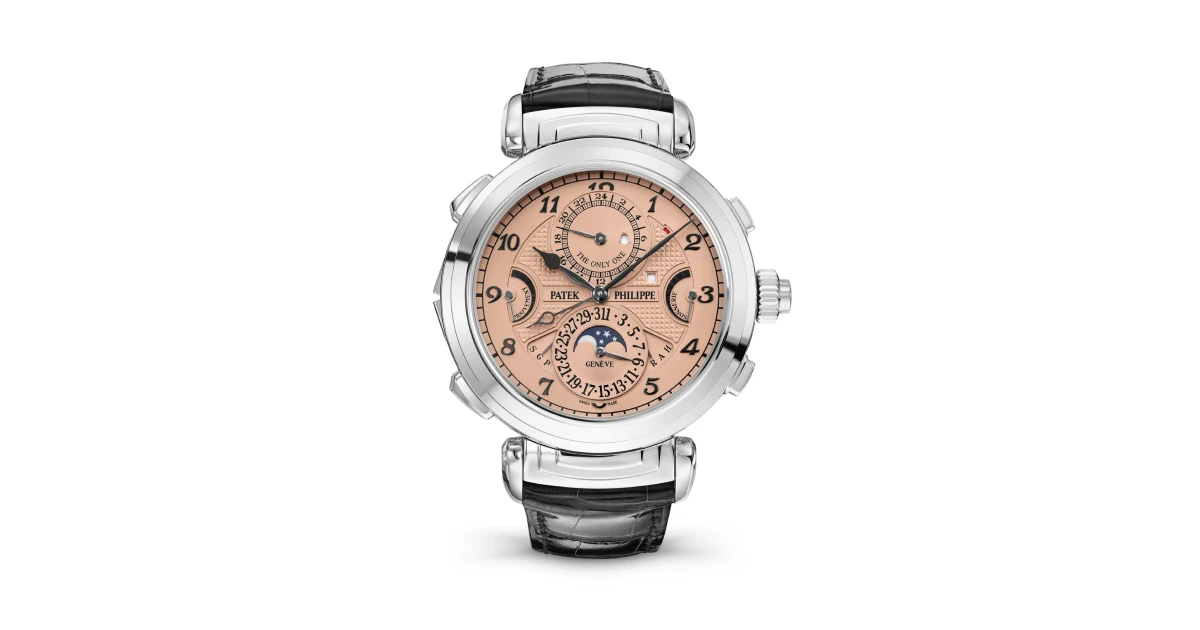
A complication is any function a watch performs beyond basic hour, minute, and seconds timekeeping. Chronographs, perpetual calendars, minute repeaters, tourbillons, and world time displays all represent different levels of mechanical complexity that require significantly more development, production, and finishing time from a manufacture. The rarer and more difficult the complication, the more it contributes to a watch's value. A minute repeater, which chimes the time on demand using small hammers and gongs inside the movement, represents one of the most labour-intensive and technically demanding complications in watchmaking, and commands corresponding premiums at both retail and auction.
Rarity, Condition, Provenance, and Documentation
Once a watch leaves the manufacture, its value trajectory on the secondary market is shaped by four factors that no brand or movement specification can control: how rare the reference is, the condition in which it has been preserved, the story attached to it, and the completeness of its documentation. These factors interact in complex ways, and understanding each one individually gives you a framework for evaluating any watch you encounter.
Rarity and Scarcity
Scarcity is one of the most powerful drivers of value across all collectible categories, and watches are no exception. Limited production runs, discontinued references, unusual dial variants, and models produced for specific markets or clients all create the kind of finite supply that collectors compete for over time. As watches are lost, damaged, or removed from circulation, surviving examples in good condition become progressively rarer.
The Patek Philippe Nautilus reference 5711 in stainless steel is a compelling illustration of how manufactured scarcity drives value. Patek discontinued the 5711 in 2021, and the final Tiffany Blue reference sold through authorised dealers at a retail price of approximately USD 52,000. Examples subsequently sold at auction for over USD 2.5 million. The discontinuation created an immediate finite supply, and collector demand did the rest.
Condition and Originality
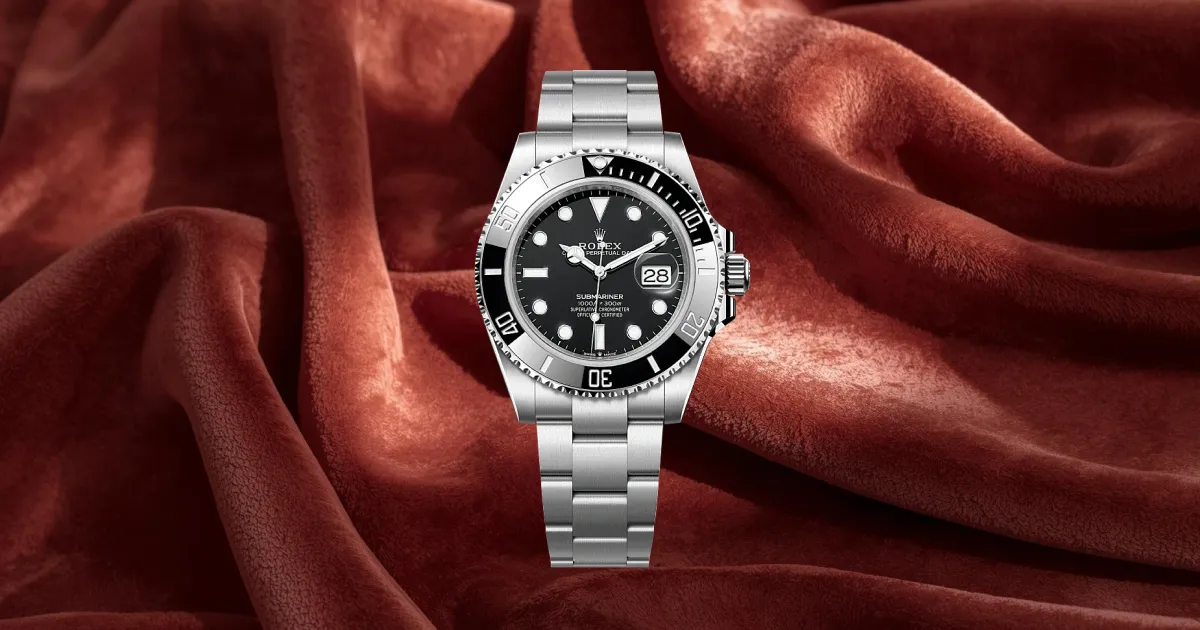
Condition is the single most consequential variable in determining the value of any specific watch example, even among references that are identical in every other respect. Two Rolex Submariners of the same reference, in different states of preservation, can trade for prices that are tens of thousands of dollars apart. The key distinction collectors make is between desirable natural ageing and problematic damage or modification.
Original components are paramount. A watch that retains its factory-original dial, hands, bezel insert, crystal, and bracelet is fundamentally more valuable than one where any of these elements have been replaced, even with period-correct service parts. For vintage references in particular, an unpolished case that retains its original sharp edges and brushed and polished surface contrasts is worth significantly more than one that has been refinished by a jeweller. Replacing original lume plots, re-dialling, or polishing the case of a vintage watch can reduce its value by between 15 and 40 percent depending on the reference and the extent of the modification.
Provenance and Historical Significance
Provenance is the documented history of a watch's ownership, and when that history includes a notable previous owner, the effect on value can be extraordinary. The Rolex Daytona reference 6239 owned by Paul Newman sold at Phillips in 2017 for USD 17.75 million, making it the most expensive Rolex ever sold at auction. A comparable example without Newman's documented ownership would typically trade for around USD 100,000. The celebrity premium in that case exceeded 17,000 percent. The watch itself was not exceptional. The story attached to it was.
Historical association drives value even without celebrity ownership. The Omega Speedmaster reference 105.012, worn by astronaut Dave Scott during the Apollo 15 mission in 1971, sold at auction for USD 1.6 million. Standard examples of the same reference trade for a fraction of that figure. A watch connected to a significant moment in history carries a story that no production variation or movement specification can replicate.
Documentation and Completeness
Original box and papers are not merely accessories. They are proof of identity, authenticity, and provenance, and they represent a meaningful premium in any serious transaction. A Rolex Submariner reference 16610 in excellent condition as a standalone watch might trade for around AUD 13,000. The same example with its original box, punched warranty card, hanging tags, and manuals could command AUD 15,000 to AUD 17,000. That gap is purely the value of complete documentation. For investment watches at higher price points, the documentation premium scales accordingly, and the absence of papers is a genuine red flag in any pre-owned transaction.
How to Assess a Watch's Value: An Australian Buyer's Guide
Understanding the factors that make a watch valuable in theory is only useful if you can apply them practically when evaluating a specific piece. The Australian pre-owned watch market has matured considerably, with active collector communities, authorised pre-owned boutiques, and strong representation on global platforms like Chrono24 providing Australian buyers with genuine market transparency.
Dial condition deserves particular attention when assessing any watch in person. The dial is the face of the watch and, for vintage references especially, it carries the most concentrated record of age and originality. A clean, untouched dial with consistent luminous material, no moisture damage, and original printing is the highest standard. For watches from the mid-twentieth century, a naturally developed patina, where the dial has aged to a warm cream or tropical brown tone, is frequently prized by collectors precisely because it cannot be reproduced or faked convincingly. Damage, re-printing, replacement lume plots, or a recently fitted service dial all reduce value substantially.
The bracelet and clasp condition is equally revealing. An original bracelet in good condition with minimal stretch between the links and a functioning clasp adds significant value. Replacement bracelets, even factory-original period items, slightly reduce the premium a purist collector will pay. For steel sports watches from Rolex and Omega in particular, original bracelets in good condition are a meaningful component of the overall valuation.
Here is a step-by-step process for assessing the value of a watch before buying or selling:
Confirm the reference and serial number: Cross-reference the case serial number against the original papers or a reputable database to confirm the watch is original to its documentation. Serial numbers confirm production date ranges and can identify non-original components.
Assess the dial without the crystal: Request removal of the caseback or use a loupe to assess the dial condition for spotting, moisture damage, re-printing, or replaced lume. For vintage references, confirm the dial is period-correct and unmodified.
Check the case for polishing: Sharp case edges, original brushed and polished surface contrasts, and visible tool marks from manufacture are all signs of an unpolished, original case. Rounded edges and a uniformly reflective surface typically indicate the case has been refinished.
Inspect the bracelet and clasp: Check the links for stretch and the clasp for wear. Confirm the bracelet reference matches the watch's known original configuration. For significant references, original bracelets add meaningful value.
Verify documentation completeness: Confirm the presence of original box, warranty card, manuals, hang tags, and any service documentation. Check that the warranty card is punched with a date consistent with the watch's known production period and that serial numbers match the watch.
Research current market comparables: Use platforms including Chrono24 and WatchCharts to identify recent sold prices for the same reference in comparable condition. Australian buyers should account for import duties and GST on international purchases when comparing global and local pricing.
Consult an independent watchmaker before committing to high-value purchases: For any watch above AUD 5,000, a pre-purchase inspection by a qualified independent watchmaker provides authentication assurance, movement condition assessment, and an independent view on originality that no seller inspection can match.


Watch Learning Centre
What Makes a Watch Valuable FAQs
The most important factors are brand prestige, movement quality, rarity of the specific reference, physical condition, originality of components, and completeness of documentation including box and papers. For vintage references, provenance and historical association can add extraordinary premiums that dwarf the contribution of any other factor. Among modern references, brand reputation, manufacture credibility, and scarcity of supply are the primary drivers of secondary market performance. No single factor operates in isolation, and the most valuable watches typically combine several of these attributes simultaneously.
Yes, significantly. Original box and papers authenticate a watch's identity, confirm its production date, and provide a chain of ownership that serious collectors and buyers value highly. For a well-regarded reference like a Rolex Submariner, the difference between a standalone example and a complete set with original box, warranty card, manuals, and hanging tags can represent a price premium of between 15 and 25 percent depending on the specific reference and condition. For higher-value vintage or collectable references, the documentation premium can be considerably larger. Keeping original paperwork with a watch throughout its ownership is one of the most straightforward ways to protect its long-term resale value.
Watches appreciate when demand for the specific reference consistently exceeds available supply. This happens most reliably when a watch comes from a brand with strong manufacture credibility, was produced in limited quantities, has been discontinued, or carries historical or cultural significance that grows over time. Rolex, Patek Philippe, and Audemars Piguet sports references are the clearest examples of watches where supply constraints and sustained collector demand have driven long-term appreciation. Most watches depreciate because they are produced in sufficient quantities to meet demand, lack manufacture movement credentials, or come from brands without the heritage and scarcity characteristics that collector markets reward over time.
For most collectable watches, polishing reduces value, sometimes significantly. Collectors prize original case condition because sharp edges, original brushed and polished surface contrasts, and the subtle marks of careful use tell the authentic story of a watch's life. When a case is refinished by a jeweller or watchmaker, the original sharp edges are rounded, the surface contrasts are lost, and the case takes on a uniformly reflective appearance that experienced collectors recognise immediately as a service polish. For vintage references in particular, a well-preserved unpolished case in honest worn condition is almost always more valuable than one that has been refinished to a superficial shine.
The most reliable method is to research recent sold prices for your specific reference and condition on platforms including Chrono24 and WatchCharts, which aggregate actual transaction data from multiple global marketplaces and auction houses. For watches above AUD 5,000 in value, a professional appraisal from a qualified independent watchmaker or an authorised pre-owned dealer in Australia provides a more precise valuation based on physical inspection. Major auction houses including Phillips, Christie's, and Sotheby's also handle watch valuations for significant pieces. Always compare multiple sources rather than relying on a single listing price, as asking prices can differ substantially from actual sold prices in the current market.