
Understanding The Dive Watch Meaning And Its Core Features
A dive watch is a purpose built timepiece designed to withstand underwater pressure while helping a diver track elapsed time. The category covers everything from rugged tool watches to refined dress divers, but they all share a common set of features rooted in genuine underwater use.
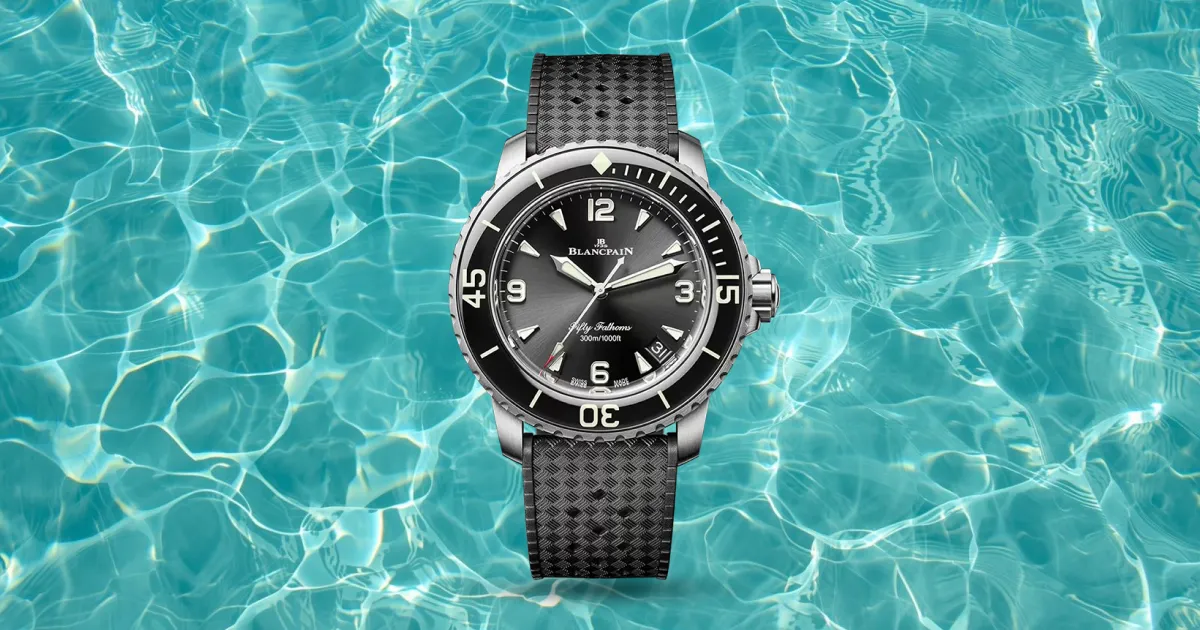
The Real Dive Watch Meaning Explained
At its simplest, a dive watch is a timepiece built to function reliably underwater and to help a diver monitor how long they have been submerged. The dive watch meaning goes beyond a high water resistance number on the dial.
A true diver is engineered to meet specific functional standards, not just marketed with diving imagery. The most widely recognised benchmark is ISO 6425, an international standard that defines what a watch must do to earn the "diver's" title.
To meet this standard, a watch needs at least 100 metres of water resistance, a unidirectional rotating bezel or other secure elapsed time indicator, and strong visibility in low light or darkness. It also has to pass tests for shock resistance, magnetic resistance, corrosion and condensation before it can carry the designation.
This matters because plenty of watches look like divers without actually being built for the job. A stainless steel case, a chunky bezel and a bit of marketing copy do not automatically make a watch fit for underwater use.
The unidirectional bezel is one of the clearest identifiers of a genuine dive watch. It only rotates anticlockwise, so if it gets knocked during a dive, it can only ever shorten the indicated remaining time rather than extend it, which protects the diver from a dangerous miscalculation.
Luminous markers and hands are another non negotiable feature, since visibility in murky or dark water can be a genuine safety issue rather than a style choice.
Many enthusiasts also point to the helium escape valve found on some professional models, designed to release built up gas during saturation diving decompression. It is a niche feature, but it signals a watch built for serious technical diving rather than weekend snorkelling.
Understanding the dive watch meaning helps explain why this category has such a devoted following among collectors, well beyond anyone who actually straps on a tank.
How Dive Watches Evolved From Tools To Icons
Dive watches did not start out as fashion statements. They were developed to solve a genuine problem for early underwater explorers who needed a reliable way to track their air supply and decompression stops.
Blancpain's Fifty Fathoms, created in the early 1950s, is widely credited as one of the first true modern dive watches, developed with input from French navy divers. Rolex followed soon after with the Submariner, which became a benchmark for the category and a fixture on the wrists of professional divers for decades.
Omega's Seamaster also entered the conversation around the same era, eventually building a reputation that extended well beyond diving thanks to its association with a famous fictional secret agent.
As dive computers became standard kit for recreational and professional divers alike, the practical need for a mechanical dive watch underwater diminished. Despite this, the category never lost its appeal.
If anything, the opposite happened. Collectors gravitated toward dive watches for their robust construction, bold proportions and genuine tool watch heritage, qualities that translate well to everyday wear on land.
Today, dive watches sit comfortably at the intersection of function and design. Brands continue to release both purist ISO certified tools and more refined, dressed up versions that borrow the silhouette without the full certification.
This evolution explains why dive watches remain one of the most popular and accessible entry points for new collectors. The shapes are familiar, the history is rich, and the build quality tends to be excellent even on watches that will never see open water.
Understanding this background also helps when comparing vintage pieces, since early dive watches often command serious premiums based on provenance, originality and condition rather than purely on specifications.
Dive Watches In The Australian Market
Australia has a strong connection to diving culture, from the Great Barrier Reef to popular wreck and reef diving spots along the southern coastline. It is no surprise that dive watches remain a consistently popular category among local collectors and divers alike.
For Australian buyers, humidity, saltwater exposure and frequent sun exposure make genuine water resistance and corrosion protection particularly relevant rather than purely theoretical concerns.
When shopping locally, there are a few practical points worth keeping in mind.
Always confirm water resistance has been tested recently if buying a pre-owned piece, since gaskets and seals degrade over time
Look for authorised dealers or reputable specialists, since Sydney and Melbourne both have established networks for servicing and authentication
Consider local servicing availability before buying a niche brand, since some specialist diver brands lack authorised service centres in Australia
Factor in humidity and saltwater exposure if you plan to wear the watch regularly at the beach or while diving
The secondary market for dive watches in Australia tends to track global trends closely, with well known references from established Swiss and Japanese brands holding their value better than lesser known options.
For newer collectors, dive watches remain one of the most sensible starting points. They are generally robust, relatively affordable to service, and easy to wear daily, which makes them a practical first step into watch collecting rather than a purely speculative purchase.
Whether the goal is genuine underwater use or simply appreciating the design heritage, the category offers something for almost every type of collector in the Australian market.



Watch Insights and Guides
What Is A Dive Watch FAQs
A dive watch is a timepiece specifically engineered to withstand the pressures of underwater use while helping a diver track elapsed time during a dive.
The term typically refers to watches that meet recognised functional standards rather than simply having a sporty design. This usually means a minimum water resistance rating, a secure elapsed time indicator such as a rotating bezel, and strong visibility in low light conditions.
Many dive watches are tested against ISO 6425, an international standard that confirms a watch can genuinely perform underwater rather than just look the part on dry land.
The key difference lies in testing and functionality rather than appearance alone. A regular water resistant watch might handle splashes or swimming, but it has not necessarily been tested to the standards required of a genuine diver.
A true dive watch must meet specific benchmarks, typically at least 100 metres of water resistance, along with features like a unidirectional bezel and enhanced shock and corrosion resistance.
Many watches borrow dive watch styling without meeting these functional requirements, so checking for genuine certification matters if underwater performance is a priority.
Not necessarily. ISO 6425 certification is the most widely recognised benchmark, but it is a voluntary standard, so plenty of capable watches choose not to pursue formal certification.
Some brands build watches that meet or exceed ISO requirements without listing the certification on the dial, often for cost or branding reasons.
That said, certification does offer a reliable shortcut for buyers who want assurance that a watch has actually been tested for genuine underwater use rather than relying on marketing claims alone.
Yes, dive watches are popular everyday options even among people who never go near the water. Their robust construction, clear dials and durable cases make them practical for daily wear, work and travel.
Many collectors choose dive watches purely for their tool watch aesthetic and history rather than functional necessity.
The main consideration is comfort and proportions, since some dive watches are larger and heavier than typical dress watches, so trying one on before buying is worthwhile.
Start with water resistance rating, since this should genuinely reflect the watch's build rather than just a number on the dial. A unidirectional rotating bezel with clear, legible markings is another essential feature for tracking elapsed time safely.
Check for strong luminosity on the hands and markers, since visibility underwater or in low light is a core function rather than a styling detail.
Finally, consider the case material, strap options and overall weight, since these affect comfort and suitability depending on whether the watch is for genuine diving or everyday wear.