
Rolex Submariner vs Omega Seamaster: The Ultimate Dive Watch Showdown
Few debates in the watch world generate as much passion as the Rolex Submariner vs Omega Seamaster. Both are icons of dive watch design, yet they represent very different philosophies when it comes to heritage, technology, and value. Whether you're buying your first luxury timepiece or adding to a collection, understanding what separates these two legends is essential. Explore our Rolex vs Omega guide for more comparisons between the two brands.
Design, Specs, and On-Wrist Feel
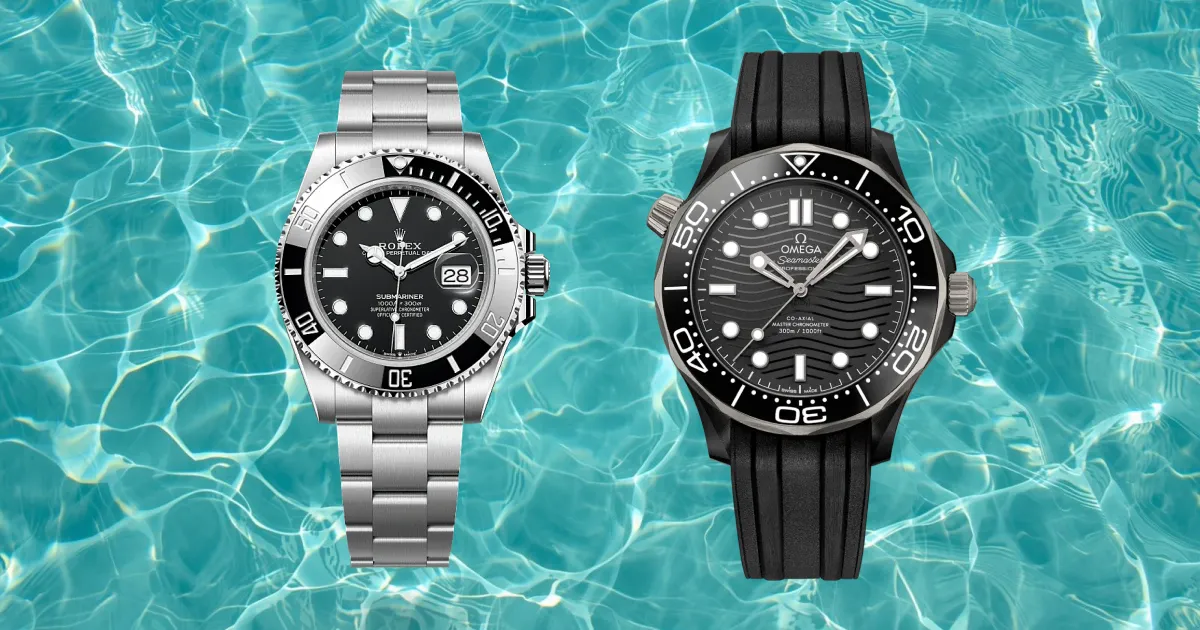
When you put these two watches side by side, the differences become clear immediately. The Submariner is a study in restraint, with a 41mm Oystersteel case, a clean unidirectional rotating bezel in Cerachrom ceramic, and a dial that reads as pure function. It is the blueprint that most modern dive watches are measured against.
The Seamaster Diver 300M takes a bolder approach. At 42mm, it features a wave-patterned dial, a scalloped ceramic bezel, and a more pronounced presence on the wrist. Omega uses a mix of stainless steel, titanium, and bi-metal options across the range, giving buyers more variety from the outset.
In a direct Rolex Submariner vs Omega Seamaster comparison, wrist feel is where opinions diverge sharply. The Submariner's compact lug design and polished side-brushed case means it sits lower and feels more refined, wearing elegantly on almost any wrist size. The Seamaster, by contrast, can read as larger than its 42mm measurement suggests due to its overall thickness and lug-to-lug length.
Both watches are rated to 300 metres of water resistance, covering the needs of recreational and most professional divers comfortably. The Seamaster adds a helium escape valve, a useful feature for saturation diving that the Submariner omits. Rolex counters with Chromalight lume, which outlasts standard Super-LumiNova in extended low-light conditions.
For buyers in the Rolex Submariner vs Omega Seamaster debate who prioritise classic versatility, the Submariner transitions from dive gear to boardroom attire with very little friction. The Seamaster leans more into its sporty identity, which works beautifully in casual and outdoor settings but can feel slightly incongruous with formal dress.
Movement, Technology, and Investment Value
Under the dial, these two watches tell very different stories about horological priorities. The Submariner runs on Rolex's Calibre 3235, an in-house movement with a 70-hour power reserve and Superlative Chronometer certification, meaning it holds accuracy to within plus or minus two seconds per day. Rolex controls every stage of production, which underpins the exceptional consistency these movements are known for.
Omega's Calibre 8800 inside the Seamaster Diver 300M is a genuinely impressive piece of engineering. It carries METAS Master Chronometer certification, independently verified by Switzerland's Federal Institute of Metrology, and delivers resistance to magnetic fields up to 15,000 gauss. That antimagnetic performance is well beyond anything the Submariner offers, and it matters in daily modern life where electronics, airport scanners, and speakers constantly generate magnetic interference.
From an investment standpoint, this is where the dive watch comparison becomes most consequential. The Submariner has held and appreciated in value with remarkable consistency over decades. Pre-owned steel models regularly trade at or above retail on the secondary market, and the watch carries a waiting list at authorised dealers globally. Omega's resale story is more nuanced. The Seamaster does hold value reasonably well, but it typically depreciates from retail in the short term before stabilising, rather than commanding a premium the way a Submariner does.
The price gap between the two is significant. The Seamaster Diver 300M retails at roughly USD 5,900, while the Submariner Date sits around USD 10,250. For many buyers, that difference alone is decisive. However, from a pure technological and specification standpoint, the Seamaster arguably offers more watch per dollar, with superior magnetic resistance, a certified movement, and strong long-term build quality.
For collectors, the Submariner's scarcity and cultural weight remain the stronger investment thesis. For enthusiasts who want cutting-edge movement technology and immediate availability, the Seamaster presents a compelling alternative.
What Australian Buyers Need to Know
The Australian market reflects global trends for both watches, with some important local nuances worth understanding. Authorised Rolex dealers in Australia include Watches of Switzerland, Kennedy, and several high-end department store boutiques. The Submariner's Rolex waiting list situation is just as pronounced here as it is overseas, with popular references like the 126610LN sometimes unavailable for extended periods through official channels.
The Omega Seamaster is a far more accessible purchase locally. Omega boutiques operate in Sydney, Melbourne, Brisbane, and other major cities, and stock availability is generally far less restricted than it is for comparable Rolex models. This immediate accessibility is a genuine advantage for Australian buyers who want to wear a serious dive watch now rather than wait indefinitely.
On the pre-owned market in Australia, the Submariner commands a notable premium. Pre-owned steel Submariners in good condition with box and papers are commonly listed on platforms like Chrono24 Australia and local classifieds well above their retail equivalents in AUD. The Seamaster pre-owned market is active but more price-flexible, offering buyers genuine negotiating room.
Here is a quick summary of key differences for Australian buyers to weigh up:
Availability: Seamaster is readily available from boutiques; Submariner requires waitlisting at authorised dealers
Price: Seamaster is the significantly more accessible entry point at retail
Resale strength: Submariner holds and often exceeds retail value on the grey market; Seamaster stabilises rather than appreciates
Technology: Seamaster's Master Chronometer movement leads on magnetic resistance and independent certification
Versatility: Submariner crosses from sport to formal wear more easily for most Australian dress codes
Variety: Seamaster offers far more dial, material, and strap combinations to suit individual style
For Australians prioritising investment potential, the Submariner remains the stronger case. For those wanting accessibility, technology, and excellent everyday wearability, the Seamaster is a genuinely outstanding choice that should not be dismissed as a second-best option. Both watches represent the best of what Swiss watchmaking can deliver.

Find the Right Watch
Rolex Submariner vs Omega Seamaster FAQs
Yes, the Submariner commands a significantly higher price at both retail and on the secondary market. The Seamaster Diver 300M retails for roughly half the price of the Submariner Date. On the pre-owned market, the gap widens further, with Submariners in steel regularly trading above retail due to high demand and limited supply. The Seamaster holds value reasonably well but typically stabilises rather than appreciating above retail the way the Submariner does.
Both movements are exceptional, but they excel in different areas. Rolex's Calibre 3235 offers a 70-hour power reserve and Superlative Chronometer precision within plus or minus two seconds per day. Omega's Calibre 8800, found in the Seamaster Diver 300M, holds METAS Master Chronometer certification and resists magnetic fields up to 15,000 gauss. For antimagnetic performance, the Seamaster leads clearly. For brand consistency and resale confidence, the Rolex movement has a longer track record.
It is possible but not straightforward. Authorised Rolex dealers in Australia, including Watches of Switzerland and Kennedy, handle allocations for popular models like the Submariner. Waiting lists at these stores can be substantial, and the most sought-after references are rarely available for walk-in purchase. Building a relationship with an authorised dealer over time improves your chances. Alternatively, reputable pre-owned platforms and grey market dealers offer unworn pieces, though at prices above the official retail rate.
Both are rated to 300 metres, comfortably exceeding the needs of recreational scuba divers. For professional saturation diving, the Seamaster has a practical edge with its helium escape valve, which allows helium to escape during decompression, protecting the watch's crystal. The Submariner omits this feature but remains a robust and highly capable dive tool. For most divers, either watch is more than sufficient. The Seamaster's technical edge is relevant primarily for commercial or deep-sea professional work.
Both are outstanding first luxury watches. The Seamaster is the more accessible choice in terms of price, availability, and variety of styles. It offers sophisticated movement technology and immediate boutique availability, making it a genuinely rewarding first purchase. The Submariner carries greater prestige, stronger resale value, and a versatility that works across more dress codes. If investment potential and brand recognition matter to you, the Submariner is worth the premium and the wait. If you want a technically impressive, wearable watch at a more accessible price, the Seamaster is a strong option.