
Rolex Datejust vs Oyster Perpetual: A Buyer's Guide to Two Icons
Choosing between the Rolex Datejust and the Oyster Perpetual is one of the most common dilemmas for anyone entering the world of luxury watches. Both sit at the heart of the Rolex catalogue, yet they offer very different experiences on the wrist. Understanding those differences is the key to making a confident purchase you will not regret.
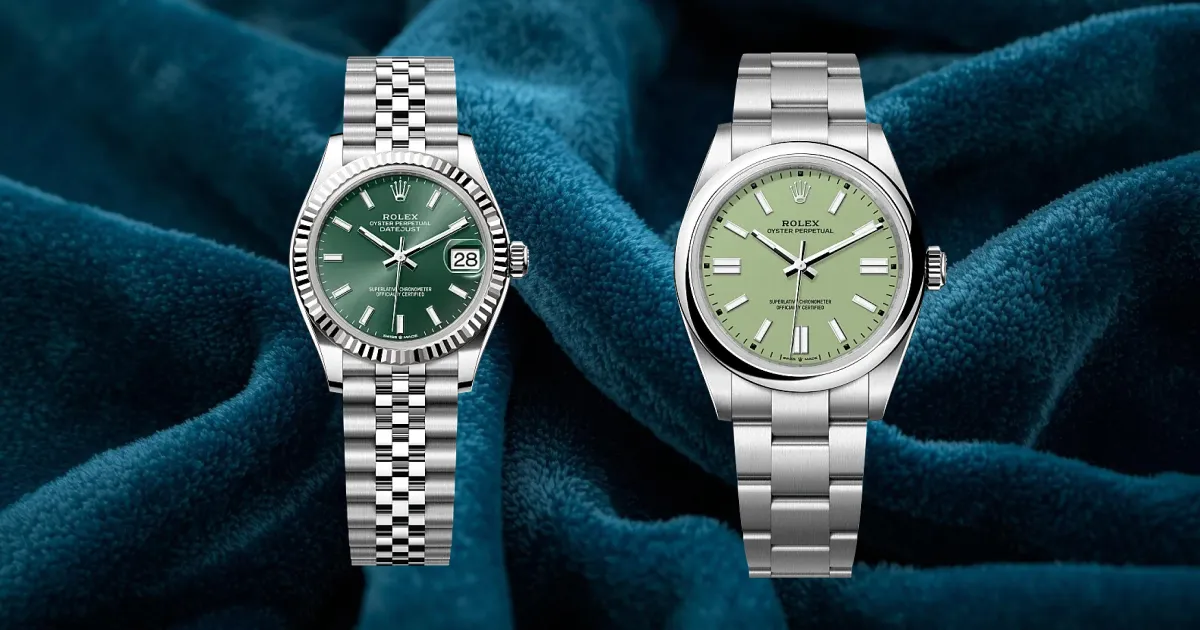
What Sets the Datejust and Oyster Perpetual Apart
At first glance, the Rolex Datejust and Oyster Perpetual can look remarkably similar. Both share Rolex's signature Oyster case, the same professional-grade water resistance, and the brand's self-winding perpetual movement. The real differences emerge when you look at the details.
The most obvious distinction is the date window. The Datejust features Rolex's iconic Cyclops lens at three o'clock, which magnifies the date 2.5 times for easy reading. The Oyster Perpetual has no date complication whatsoever, giving it a cleaner, more symmetrical dial.
Design Philosophy
The Datejust, introduced in 1945, was the world's first self-winding waterproof wristwatch with a date display. It has always been positioned as a dress watch with genuine versatility, available in a wide range of dial colours, bracelet options, and case sizes from 28mm to 41mm.
The Oyster Perpetual, by contrast, leans into purposeful simplicity. Its dial is uncluttered, its form is direct, and it communicates a quiet confidence that many collectors find deeply appealing. Right now, the Oyster Perpetual is available in case sizes ranging from 28mm to 41mm, with a rotating selection of bold dial colours that have generated significant buzz in the collector community.
Movement and Specifications
Both watches use in-house Rolex movements with similar performance credentials, including a 70-hour power reserve and Chronometer certification from the Official Swiss Chronometer Testing Institute (COSC). The practical difference in how these watches perform day to day is negligible.
Where they diverge is in the bracelet options available. The Datejust offers the choice of the Oyster bracelet or the more elegant Jubilee bracelet, the latter being exclusive to the Datejust lineage. This bracelet distinction alone can be a deciding factor for buyers seeking a dressier aesthetic. Those researching the broader Rolex guide will find these bracelet nuances covered in depth across the full catalogue.
Investment Potential and Resale Value Compared
For buyers who think beyond the wrist and consider the long-term value of their purchase, the Datejust vs Oyster Perpetual conversation takes on an additional dimension. Both hold value well compared with most watch brands, but their secondary market behaviour differs in meaningful ways.
The Datejust has one of the deepest and most liquid resale markets in the watch world. Its longevity since 1945, combined with an enormous variety of references, means there is genuine demand from collectors, dealers, and newcomers alike. Certain Datejust references, particularly vintage examples and those with rare dials, have shown consistent price appreciation over time.
The Datejust Investment Case
Stainless steel Datejust models with the Jubilee bracelet and classic white or black dials tend to hold value reliably. Two-tone models combining Oystersteel and Rolesor yellow gold offer a distinct look and maintain strong resale interest. The wide variety of configurations means collectors can find a Datejust at multiple price points, making entry into this reference accessible.
For those interested in a deeper Rolex comparison between the two models, it is worth noting that the Datejust's sheer volume of production historically means prices are less volatile than some rarer Rolex references.
The Oyster Perpetual Investment Case
The Oyster Perpetual had a notable moment when certain coloured dial versions, particularly the "Tiffany" turquoise and candy-pink dials, generated extraordinary premiums on the secondary market. This demonstrated that even an entry-level Rolex can become a collector's grail piece when the right dial enters the picture.
Currently, the Oyster Perpetual trades at lower premiums than the Datejust in most configurations, which actually makes it an attractive entry point. Buyers who purchase at retail and hold long term benefit from Rolex's brand strength, even if the Oyster Perpetual does not command the same consistent secondary market depth as the Datejust. The coloured dial releases remain the Oyster Perpetual's strongest card in any investment conversation.
Buying the Datejust or Oyster Perpetual in Australia
The Australian market for Rolex watches is buoyant and, at times, frustrating. Official Rolex authorised dealers (ADs) in Australia operate waiting lists for many references, and both the Datejust and Oyster Perpetual are subject to this dynamic to varying degrees depending on configuration and location.
In Australian cities like Sydney and Melbourne, AD relationships matter enormously. Buyers with an established purchase history at a boutique will generally have better access to desirable references than walk-in customers. This is a reality of the current market that applies to both models discussed here.
What to Expect When Buying in Australia
The following points are worth understanding before you approach an Australian AD or grey market dealer:
Retail pricing: Both models are priced in AUD and are subject to periodic Rolex price adjustments. Stainless steel configurations are typically the most sought-after and hardest to secure at retail.
Grey market premiums: Reputable grey market dealers in Australia, particularly in Sydney's CBD and Melbourne's Emporium, carry both models at a premium above retail. The premium on the Datejust is generally more stable, while Oyster Perpetual premiums can spike sharply when a popular dial colour launches.
Pre-owned market: Australia has a healthy pre-owned Rolex market. Platforms and dealers specialising in certified pre-owned watches are a practical alternative, particularly for buyers who want to avoid waiting lists entirely.
GST and duty considerations: Rolex watches purchased overseas and brought into Australia may be subject to GST on import. Always factor this into any overseas purchase calculation.
Service costs: Both models use similar movements, so long-term service costs in Australia are comparable. Budget for a full service roughly every ten years through a Rolex authorised service centre.
For most Australian buyers, the Datejust remains the safer, more versatile choice given its deeper resale market. The Oyster Perpetual is ideal for buyers who prize simplicity and are prepared to be patient for the right dial configuration.

Explore Watch Differences
Rolex Datejust vs Oyster Perpetual FAQs
The most significant functional difference is the date complication. The Datejust features a date window at three o'clock with a Cyclops magnification lens, while the Oyster Perpetual has no date display and a fully clean dial. Both watches share the same Oyster case construction and Rolex's self-winding perpetual movement. The Datejust also offers the Jubilee bracelet as an option, whereas the Oyster Perpetual is only available on the Oyster bracelet.
The Oyster Perpetual holds its value well due to Rolex's brand strength, but it generally commands lower secondary market premiums than the Datejust. That said, certain coloured dial releases have fetched substantial premiums above retail, demonstrating genuine collector interest in specific configurations. As an entry point into Rolex ownership, it offers a cost-effective way to hold a watch with strong resale liquidity. Buyers should focus on condition, box and papers, and desirable dial colours to maximise long-term value retention.
Both watches are built to exceptional standards and are entirely suitable for daily wear. The Oyster case on both models provides 100 metres of water resistance, making them robust enough for most everyday situations. The Oyster Perpetual's clean dial and lack of complications gives it a slightly sportier, more casual feel. The Datejust, with its date function and choice of Jubilee bracelet, transitions more naturally between casual and formal settings, making it arguably the more versatile option for someone who wants one watch for all occasions.
Both models are priced in AUD and adjusted periodically by Rolex. The Oyster Perpetual is generally the more affordable entry point into the Rolex catalogue, while the Datejust sits at a higher retail price reflecting its additional complication, wider range of configurations, and bracelet options. On the grey market, both attract premiums above retail, with the Datejust typically commanding a more consistent premium due to its deeper collector demand. For current pricing, it is best to contact an authorised Rolex dealer in Australia directly.
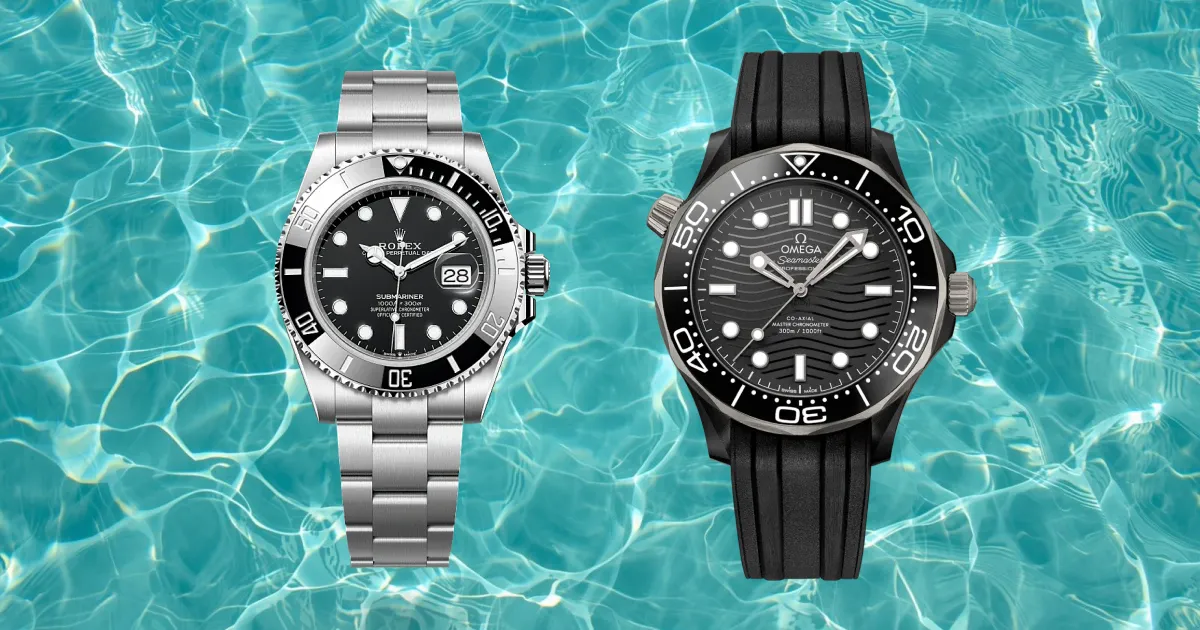
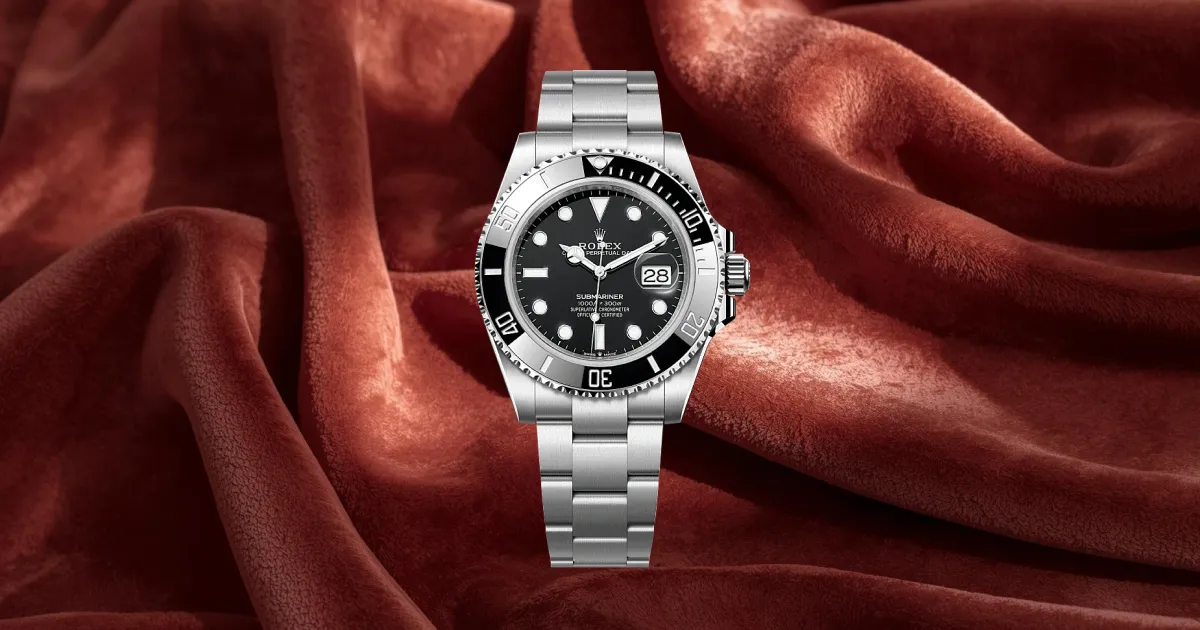
Yes, both the Datejust and Oyster Perpetual carry a water resistance rating of 100 metres, which makes them suitable for recreational swimming and snorkelling. They are not designed for scuba diving, which requires the Rolex Submariner or Sea-Dweller. It is important to ensure the crown is properly screwed down before any water exposure, as the Oyster case's water resistance depends on the screw-down crown being fully engaged. Rolex recommends having the water resistance professionally tested during routine servicing.