
Omega vs TAG Heuer: Which Swiss Watch Brand Is Right for You?
When it comes to Swiss watchmaking at the luxury end of the accessible market, Omega and TAG Heuer are two names that come up time and again. Both have deep roots in motorsport and sport, both sit at a similar price point, and both have legions of loyal fans around the world. Choosing between them comes down to what you value most in a watch.
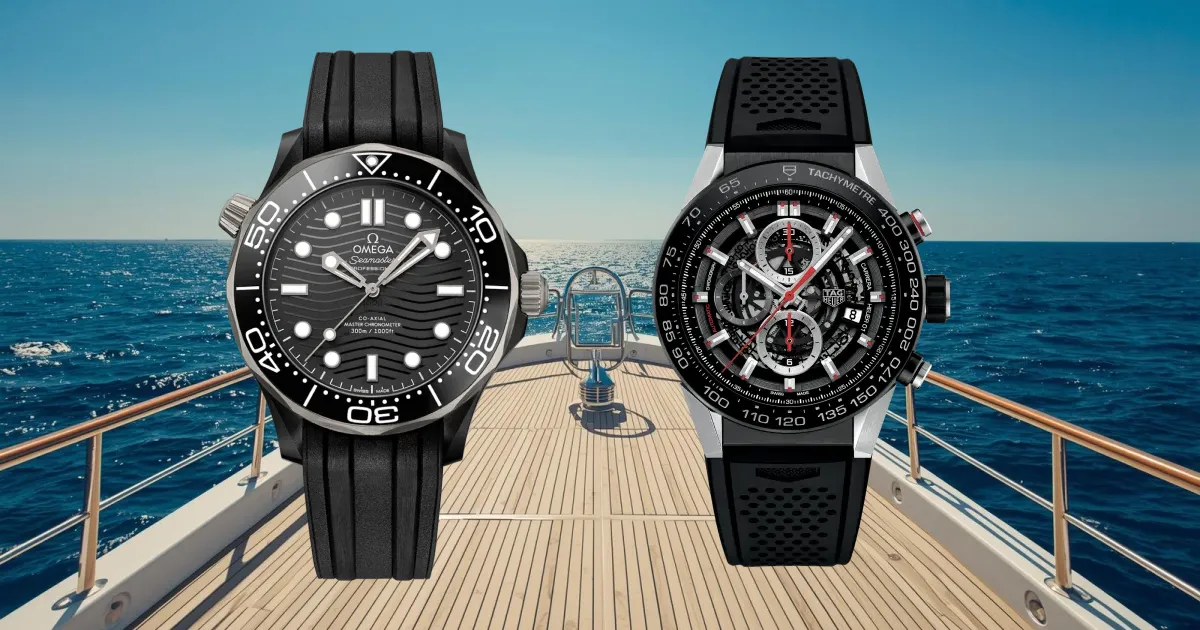
Heritage, History, and Brand Identity
Few debates in horology spark as much passion as the Omega vs TAG Heuer comparison. Both brands have more than 150 years of history behind them, though their stories and identities have taken very different paths.
Omega was founded in La Chaux-de-Fonds, Switzerland, in 1848 and has built its reputation on precision and prestige. It has served as the official timekeeper of the Olympic Games since 1932, and its Speedmaster became the first watch worn on the moon in 1969. That kind of heritage is hard to manufacture, and it underpins Omega's position as one of the most respected names in Swiss watchmaking.
TAG Heuer traces its roots to 1860, when Edouard Heuer established his workshop in Saint-Imier. The brand made its name in precision sports timing, developing some of the earliest automatic chronographs and supplying timekeeping equipment for the Olympic Games and Formula 1. The "TAG" prefix was added in 1985 following an acquisition by Techniques d'Avant Garde, linking the brand to motorsport in a very tangible way.
Brand Positioning
Today, the two brands occupy slightly different spaces despite overlapping price points. Omega leans into its association with space exploration, James Bond, and Olympic prestige. TAG Heuer positions itself squarely in the world of motorsport and contemporary culture, regularly partnering with Formula 1 and recruiting younger brand ambassadors.
For Australian collectors, both brands have strong boutique and authorised dealer presences in cities like Sydney, Melbourne, and Brisbane. However, Omega's association with NASA and the Olympics tends to give it a slight edge in broad name recognition among non-watch enthusiasts, which can matter when wearing a piece in everyday settings.
The identity question is really a lifestyle question. Omega says precision, tradition, and quiet authority. TAG Heuer says speed, boldness, and modern cool.
Movements, Quality, and Value Retention
Beyond brand image, the real measure of any watch is what sits inside the case and how well the piece holds its value over time. This is where the two brands diverge more meaningfully.
Omega has invested heavily in in-house movement development, and that investment shows. The brand's Co-Axial escapement, developed in partnership with watchmaker George Daniels and introduced in the late 1990s, significantly reduced friction and improved long-term accuracy. Many current Omega movements are also certified to METAS Master Chronometer standards, meaning they are tested for accuracy, magnetic resistance, and water resistance beyond standard COSC benchmarks.
TAG Heuer's approach to movements has historically been more varied. The brand has used a mix of in-house calibres and ébauches sourced from external suppliers, depending on the model and price point. In recent years, TAG Heuer has made meaningful progress on in-house development, most notably with the Heuer 02 and Heuer 02T movements used in the Carrera and Monaco lines. These are genuine in-house chronograph calibres and represent a real step forward for the brand's technical credibility.
Resale and Investment Performance
On the secondary market, Omega generally holds its value more consistently across its range. References like the Speedmaster Professional, the Seamaster 300M, and the Constellation are all reliably liquid on the resale market, both in Australia and globally. Limited editions and special references can command significant premiums.
TAG Heuer watches, with some notable exceptions, tend to depreciate more steeply once purchased at retail. The Monaco and certain Carrera chronographs are the strongest performers in the TAG Heuer stable. Vintage TAG Heuer pieces, particularly pre-TAG Heuer-era Heuer references, have attracted serious collector interest and strong prices at auction.
For buyers approaching these brands as an investment, Omega is the more reliable choice right now. For buyers who simply want a beautiful, well-made sports watch and are less focused on resale, TAG Heuer offers compelling options at very competitive price points.
What Australian Buyers Should Know
Australia has a passionate and growing watch collecting community, and both Omega and TAG Heuer are well represented across the country. Understanding how these brands perform in the local market is useful context for anyone making a purchase decision.
Omega operates dedicated boutiques in key Australian cities and benefits from strong brand recognition thanks to its Olympic timekeeping role, which resonates well with Australian sports culture. TAG Heuer has a similarly strong retail presence and benefits from its Formula 1 association, which enjoys a dedicated and enthusiastic Australian fanbase.
Grey market pricing is worth paying attention to in Australia. Both brands can be found through authorised dealers at full retail, but discounts of 10 to 20 per cent or more are often available through reputable grey market dealers for popular references. This can make an already accessible price point even more attractive, though it is worth checking that your warranty position is clear before purchasing.
Key Considerations for Australian Buyers
Service costs: Omega and TAG Heuer both have authorised service centres in Australia. Omega service intervals are typically recommended every five to ten years for Co-Axial movements, which reduces long-term ownership costs.
Availability: Some high-demand Omega references, particularly the Speedmaster Professional, can have waitlists at authorised dealers. TAG Heuer references are generally more readily available.
Water resistance: Both brands offer strong sport watch options suited to Australia's beach culture, with the Seamaster and Aquaracer lines being particularly popular.
Community: Australia's watch collecting forums and groups discuss both brands extensively. The Omega Seamaster and TAG Heuer Carrera are among the most talked-about pieces in local enthusiast circles.
Currency: The Australian dollar's fluctuation against the Swiss franc can affect local retail pricing. Buying during favourable exchange rate periods can represent a meaningful saving on retail price.
For a thorough side-by-side view, consulting a dedicated TAG Heuer comparison or a detailed Omega comparison resource will help you evaluate specific references against your budget and style.

Brand Comparison Guide
Omega vs TAG Heuer FAQs
It depends on what you value. Omega is generally considered the more prestigious of the two brands, with stronger secondary market performance and a deeper history of in-house movement development. Its associations with the Olympics and space exploration give it a heritage that is hard to match. That said, TAG Heuer produces genuinely excellent watches, particularly in the chronograph category, and its motorsport pedigree is legitimate and deep. Neither brand is objectively "better." It comes down to personal preference, intended use, and budget.
Omega holds its value more consistently across a wider range of references. Models like the Speedmaster Professional and Seamaster 300M tend to retain a healthy percentage of their retail price on the secondary market, and limited editions can appreciate. TAG Heuer watches, with the exception of certain Monaco and vintage Heuer references, typically depreciate more at retail. For buyers who plan to sell eventually, Omega is the safer investment. For buyers who simply want to enjoy the watch, TAG Heuer often represents strong value for money at the point of purchase.
Omega has a long history of in-house movement development and currently produces calibres certified to METAS Master Chronometer standards, which is one of the most rigorous testing regimes in the industry. TAG Heuer has historically used a mix of in-house and externally sourced movements, though it has made significant progress with its own calibres in recent years, particularly the Heuer 02 chronograph movement. Overall, Omega's movement programme is currently more developed and consistently applied across its range.
Both are excellent choices for a first serious watch. Omega is often recommended for buyers who want a watch with strong resale value and immediate name recognition outside of watch enthusiast circles. The Seamaster and Speedmaster are both iconic, wearable, and hold their value reasonably well. TAG Heuer is a great choice for buyers drawn to sporty, bold design and motorsport heritage. The Carrera in particular is a compelling first chronograph. Your budget and which design speaks to you personally should guide the decision more than brand ranking alone.
In most cases, yes, if heritage, movement quality, and resale value are priorities. Omega's in-house movements, METAS certification, and deeper collector appeal justify its typically higher price point compared to equivalent TAG Heuer references. That said, some TAG Heuer references, particularly those featuring the Heuer 02 in-house movement, close the gap meaningfully. If you are comparing a basic TAG Heuer model to an Omega with a Co-Axial movement, the Omega premium is well justified. If you are comparing equivalent chronograph models, the gap is narrower and may come down to design preference.