
Grand Seiko vs Rolex: Craftsmanship, Value and the Ultimate Choice
Few debates in the watch world generate as much passion as Grand Seiko vs Rolex. Both brands sit at the top of their respective countries' watchmaking traditions, yet they represent very different ideas about what a luxury watch should be and do. Whether you are drawn to the artisanal finishing of Japan's finest or the iconic prestige of Switzerland's most recognised name, this guide breaks down exactly what sets them apart.
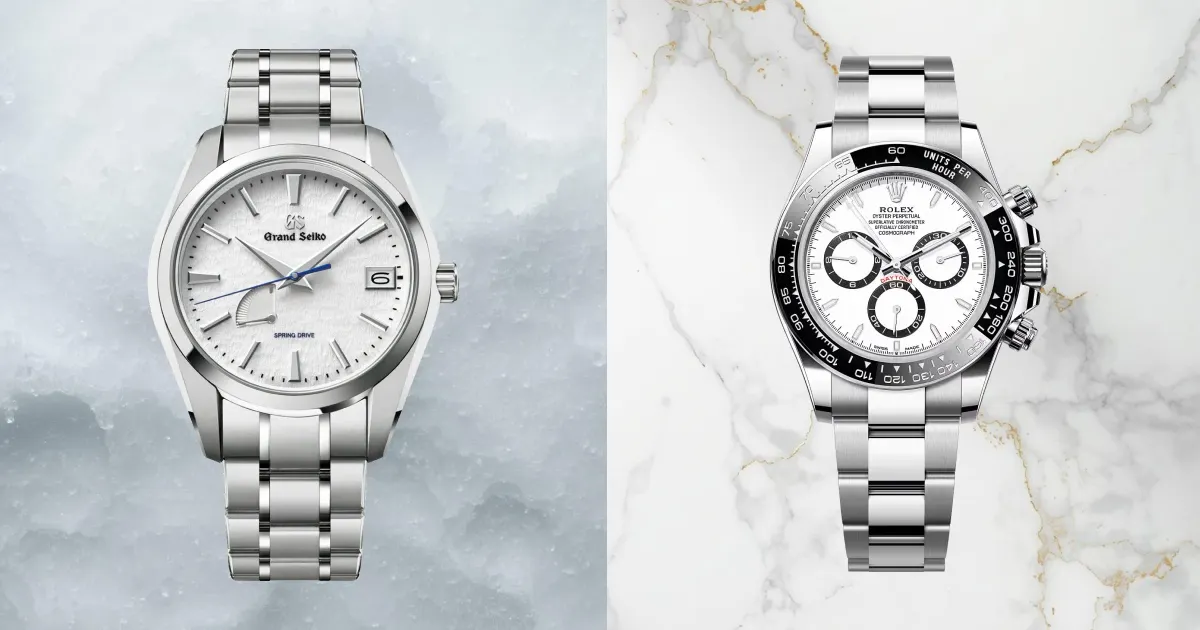
Heritage and Philosophy: Two Very Different Watchmaking Stories
Rolex was founded in 1905 by Hans Wilsdorf in London as Wilsdorf & Davis. The brand registered the Rolex name in 1908 and moved its headquarters to Geneva after World War I, cementing its identity as the definitive Swiss luxury watch. Its history reads like a list of horological firsts: the world's first waterproof wristwatch case in 1926, the self-winding Perpetual rotor in 1931, and chronometer-certified movements that set the benchmark for Swiss precision.
Grand Seiko was born from a different kind of ambition. Launched in 1960 by Seiko, the line was created with a single goal: to produce the most accurate, durable, and beautiful watch possible. For its first fifty years it was largely a Japanese secret, not exported to international markets until 2010. It became an independent brand in 2017, and its philosophy, known as "The Nature of Time," draws on Japanese landscapes and seasons to inform everything from dial texture to case geometry.
These histories shape the two brands' identities at a fundamental level. Rolex is a marketing and engineering powerhouse with a century of iconic tool watches behind it, producing over one million pieces annually. Grand Seiko, by contrast, operates much more like a high-end boutique manufacture, with production in the tens of thousands and an emphasis on hand finishing that is difficult to find anywhere else at this price point. For anyone exploring the Grand Seiko guide for the first time, understanding this foundational difference is the essential starting point for the comparison.
Movement Technology and Finishing: Where Grand Seiko Pulls Ahead
When it comes to movement technology, Grand Seiko's most celebrated innovation is the Spring Drive. Development began in 1977 when engineer Yoshikazu Akahane set out to create an "everlasting watch" that combined mechanical power with the precision of quartz. After more than two decades and hundreds of prototypes, the technology was perfected and introduced to the Grand Seiko line in 2004. The Spring Drive uses a traditional mainspring for power but regulates timekeeping through an electromagnetic brake controlled by a quartz oscillator, achieving an accuracy of plus or minus one second per day. No other brand in the world offers this technology.
Beyond the Spring Drive, Grand Seiko also produces a high-precision Hi-Beat mechanical movement running at 36,000 vibrations per hour, and a 9F quartz calibre accurate to within ten seconds per year. Each movement is hand-assembled and regulated by a master watchmaker. The dial finishing, particularly the Zaratsu polishing technique applied to cases and the hand-crafted textured dials inspired by nature, elevates Grand Seiko into genuinely exceptional territory from a craft perspective.
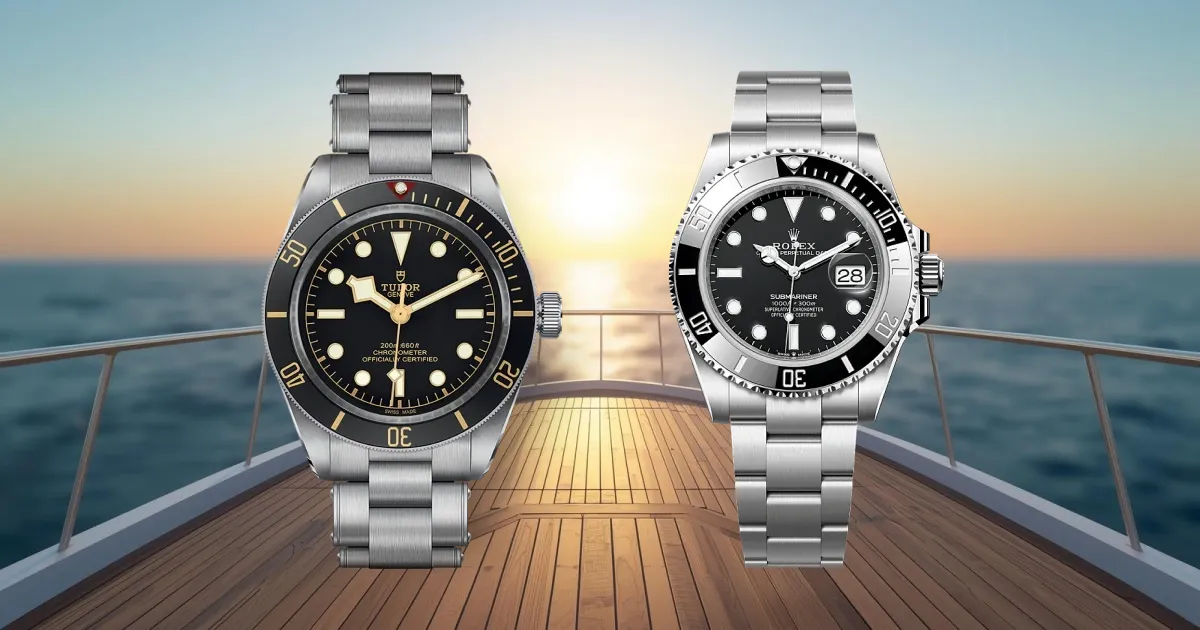
Rolex is no slouch on the technical front. Its in-house movements are robust, highly accurate, and chronometer-certified to COSC standards. The Rolex Submariner's movement, the Cal. 3235, offers a 70-hour power reserve and uses a blue Parachrom hairspring for resistance to shocks and temperature changes. However, Rolex movements are engineered for reliability and precision at scale, rather than the kind of intricate decoration and finishing you find inside a Grand Seiko. On the wrist and under a loupe, Grand Seiko simply offers more visible craft for the money. For collectors doing a Rolex comparison from the perspective of finishing and horological innovation, this is where the Japanese brand consistently surprises.
Investment, Resale and the Australian Market: What Buyers Need to Know
In terms of investment performance, Rolex has a commanding lead. Many Rolex models, particularly steel sports references like the Submariner, Daytona, and GMT-Master II, regularly trade above their retail price on the secondary market. This is driven by deliberately limited supply, enormous global demand, and decades of brand-building that has made Rolex synonymous with status and financial reliability. For buyers who want a watch that functions almost like a liquid asset, Rolex remains the clear choice.
Grand Seiko tells a different investment story. Most standard models lose some value on the pre-owned market, though limited editions and certain dial variants can hold value more stubbornly. The brand's investment thesis is really about quality for money rather than resale appreciation. A Grand Seiko comparison reveals that, at equivalent price points, you often get more sophisticated movement technology and finer case finishing than Rolex can offer. The question is whether those qualities matter to you more than resale confidence.
In Australia specifically, Grand Seiko has built a uniquely strong following. Grand Seiko opened its first Australian boutique in Sydney in 2019 and launched a second boutique on Melbourne's Collins Street in 2025, reflecting genuine local demand. Australia was even honoured with the brand's first limited edition not inspired by Japanese nature, the Pink Flannel Flower, making it the only market outside Japan to receive such a distinction. Here is what Australian buyers should consider when choosing between the two brands:
Rolex is widely available through authorised dealers, but Rolex waitlists for popular steel sports models remain long and unofficial premiums are common.
Grand Seiko is more readily available at retail, meaning you can typically purchase the model you want without years of brand loyalty.
Both brands have a healthy pre-owned market in Australia through reputable dealers, though Rolex pre-owned prices tend to be less volatile.
For collectors primarily motivated by craft and daily wearing pleasure, Grand Seiko frequently offers better value per dollar spent.
For those who want strong international recognition and the highest resale confidence, Rolex is still the safer choice.

Watch Comparison Hub
Grand Seiko vs Rolex FAQs
In terms of case finishing and movement artistry, Grand Seiko is widely regarded as offering a higher level of hand craftsmanship than Rolex at equivalent price points. Techniques like Zaratsu polishing and intricate dial finishing are difficult to find anywhere else in this price bracket. Rolex, however, leads on movement robustness, reliability at scale, and overall brand prestige. Both brands use only the finest materials and are fully vertically integrated, so quality is exceptional across the board. The right answer depends on which qualities matter most to you personally.
Generally, no. Rolex is widely recognised as one of the strongest watch investments available, with popular models like the Submariner and Daytona regularly trading at or above retail on the secondary market. Grand Seiko watches typically depreciate modestly once sold, though limited editions and special dial variants can hold value more effectively. Grand Seiko is built primarily to be worn and appreciated, rather than flipped for profit. If strong resale performance is your priority, Rolex is the more reliable choice. If you prioritise craftsmanship and wearing pleasure, Grand Seiko often offers better value for your money.
The Spring Drive is a movement technology unique to Grand Seiko, developed over more than two decades of research before being introduced to the Grand Seiko line in 2004. It works by using a traditional mechanical mainspring for power, while an electromagnetic regulator controlled by a quartz oscillator governs its timekeeping accuracy. The result is a movement accurate to plus or minus one second per day, far exceeding the COSC standard for mechanical watches. It is considered one of the most significant watchmaking innovations of the modern era and remains exclusive to Grand Seiko and its sister brands.
Grand Seiko has a growing retail presence in Australia. The brand opened its first Australian boutique in Sydney in 2019, followed by a second boutique on Melbourne's Collins Street in 2025. A number of authorised retailers and specialist watch dealers also stock Grand Seiko across the country. For pre-owned pieces, established Australian watch dealers like WristWorks are well regarded within the local collector community for authentic, verified inventory. Unlike Rolex, where popular models can involve lengthy waitlists, Grand Seiko is typically available to purchase without extended delays.
Both are excellent choices for a first serious luxury watch, but they suit different buyers. Rolex offers immediate global recognition, strong resale value, and a proven track record as both a daily wearer and a long-term asset. If you value status, broad recognition, and investment confidence, Rolex is the natural entry point. Grand Seiko offers superior finishing, unique movement technology, and often more accessible pricing for an equivalent level of craft. If you are buying primarily for personal enjoyment and horological appreciation rather than external recognition, Grand Seiko frequently delivers more watch for your money.