
Cartier vs Rolex: Heritage, Design and Investment Value Compared
Few debates in the watch world are more compelling than Cartier vs Rolex. Both brands carry enormous prestige, yet they represent fundamentally different approaches to luxury watchmaking. Whether you are drawn to Cartier's Parisian artistry or Rolex's engineering-driven precision, this guide breaks down everything you need to know to make the right choice.
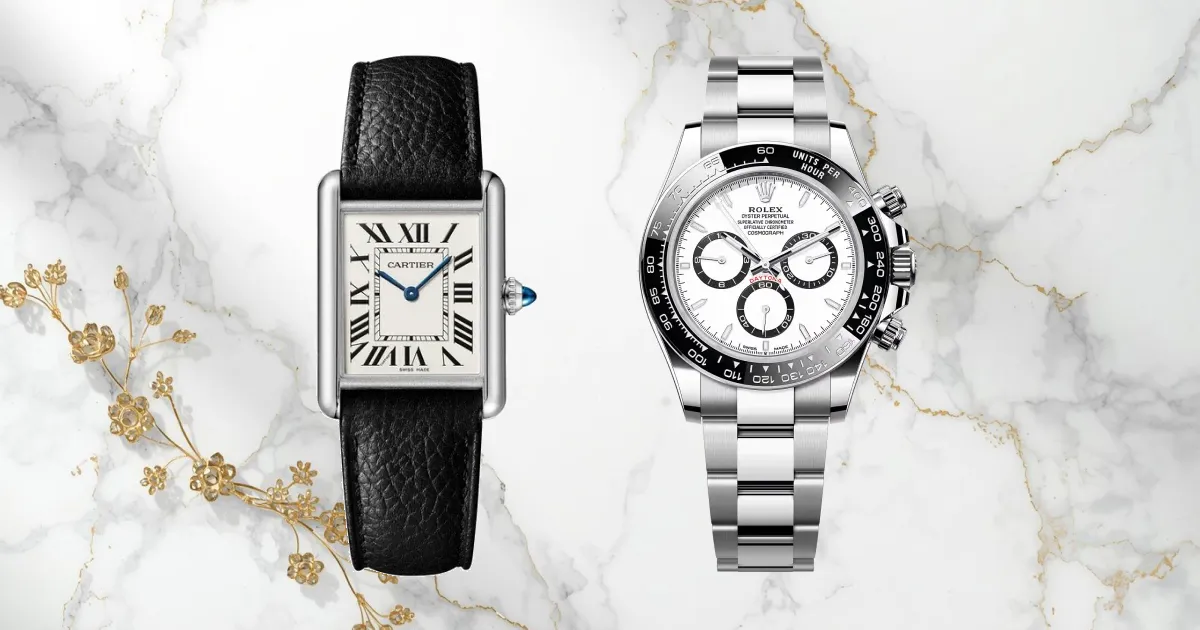
Two Very Different Approaches to Luxury Watchmaking
Rolex and Cartier are both titans of the luxury watch world, but comparing them is not straightforward because they are built on entirely different philosophies. Understanding those philosophies is the first step in deciding which brand suits you.
Rolex, founded in 1905, built its reputation on precision engineering, durability, and tool-watch performance. Its movements are produced entirely in-house and certified as Superlative Chronometers, meaning they meet accuracy standards of +2/-2 seconds per day. The brand's identity is anchored in iconic models designed for professional use, from deep-sea diving to mountaineering.
Cartier, by contrast, began as a Parisian jeweller in 1847 and came to watchmaking through artistry rather than engineering ambition. The brand holds a significant place in horological history: it produced the Santos in 1904, widely regarded as one of the world's first purpose-built wristwatches, predating key Rolex innovations by nearly five decades.
Design Philosophy
Rolex maintains a consistent aesthetic centred on round cases and a unified Oyster case design that creates a recognisable family look across most of its collection. The result is a brand identity that is immediately legible on any wrist, anywhere in the world.
Cartier offers far greater design diversity. From the rectangular Tank, inspired by the profile of WWI military tanks in 1917, to the round Ballon Bleu with its distinctive sapphire cabochon crown, Cartier watches read as jewellery as much as timekeeping instruments. This design versatility appeals to collectors who want something distinctive rather than universally recognisable.
For buyers browsing Cartier watches, the variety of case shapes, dial styles, and finishing options is a significant draw. For those exploring Rolex watches, the coherence of the collection and the prestige of the Oyster case offer their own kind of satisfaction.
The choice often comes down to what matters most to you: engineering excellence or artistic expression, a tool watch or a wearable work of art.
Movements, Pricing, and Resale Value: The Investment Case
When making a significant watch purchase, understanding both the technical quality and the financial trajectory of each brand is essential. Cartier vs Rolex looks quite different depending on whether you prioritise craftsmanship, wearability, or long-term value retention.
Movement Quality
Rolex produces all of its calibres in-house, from the oscillator to the escapement. Every movement is COSC-certified before receiving additional in-house testing that tightens accuracy tolerances even further. This level of vertical integration is rare in the industry and is a major reason Rolex commands the prices it does.
Cartier uses a mix of in-house calibres, such as the 1847 MC found in the Tank Must, and well-finished modified movements from external suppliers. The focus is on reliable, elegant timekeeping rather than pushing the boundaries of mechanical performance. For most wearers, the difference is academic, but for serious collectors, it matters.
Pricing and Resale
Entry-level Cartier watches, such as the Tank Must in steel, sit in a more accessible price bracket than equivalent Rolex entry points, making Cartier a popular first luxury watch for many buyers. The trade-off is resale performance.
Rolex dominates the secondary market in a way few brands can match. It accounts for a commanding share of global secondary market transaction volume, driven by deliberate production constraints and relentless demand for its sports models. Even in softer market conditions, many Rolex references trade above their original retail price.
Cartier's resale picture is more nuanced. Everyday steel models tend to depreciate modestly from retail, while precious metal pieces, limited editions, and vintage references in excellent condition can hold their value well or appreciate meaningfully. Vintage Tank Louis Cartier models in gold, for example, have attracted serious collector interest in recent years.
For a thorough Rolex comparison or a detailed Cartier comparison with other luxury brands, the secondary market data tells a consistent story: Rolex wins on investment reliability, while Cartier wins on accessibility and design breadth.
Buying Cartier or Rolex in Australia: What You Need to Know
The Australian luxury watch market has matured significantly, with both Cartier and Rolex maintaining authorised retail networks in major cities and strong representation in the secondary market. Knowing the local buying landscape helps you get the best outcome whether you are purchasing new or pre-owned.
Authorised Retail and Waitlists
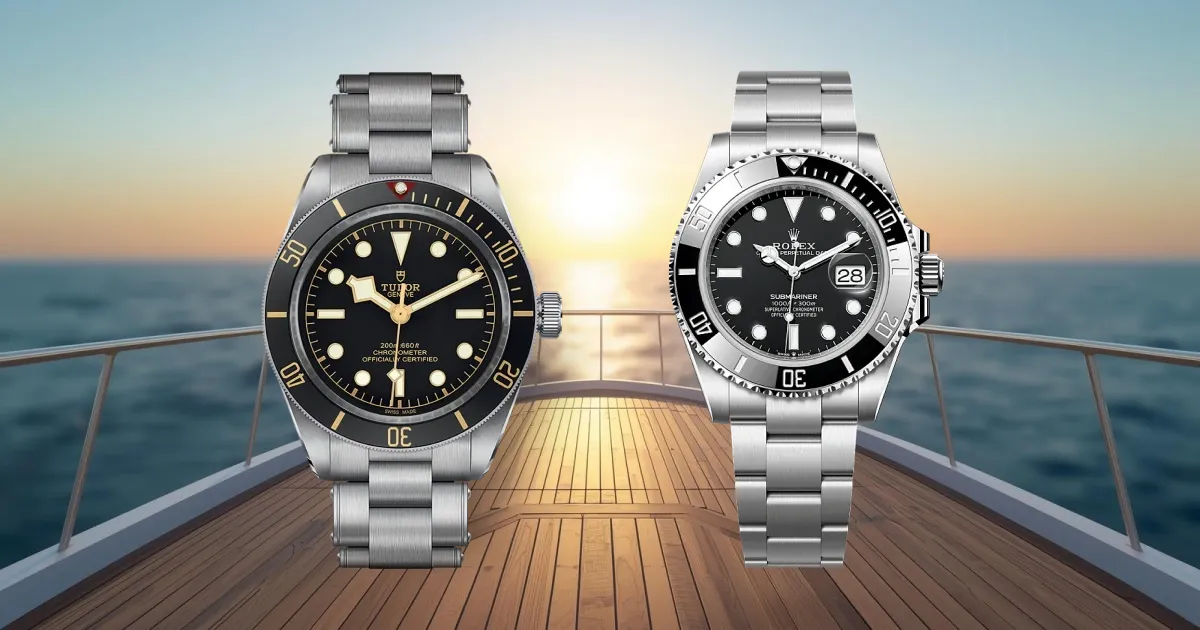
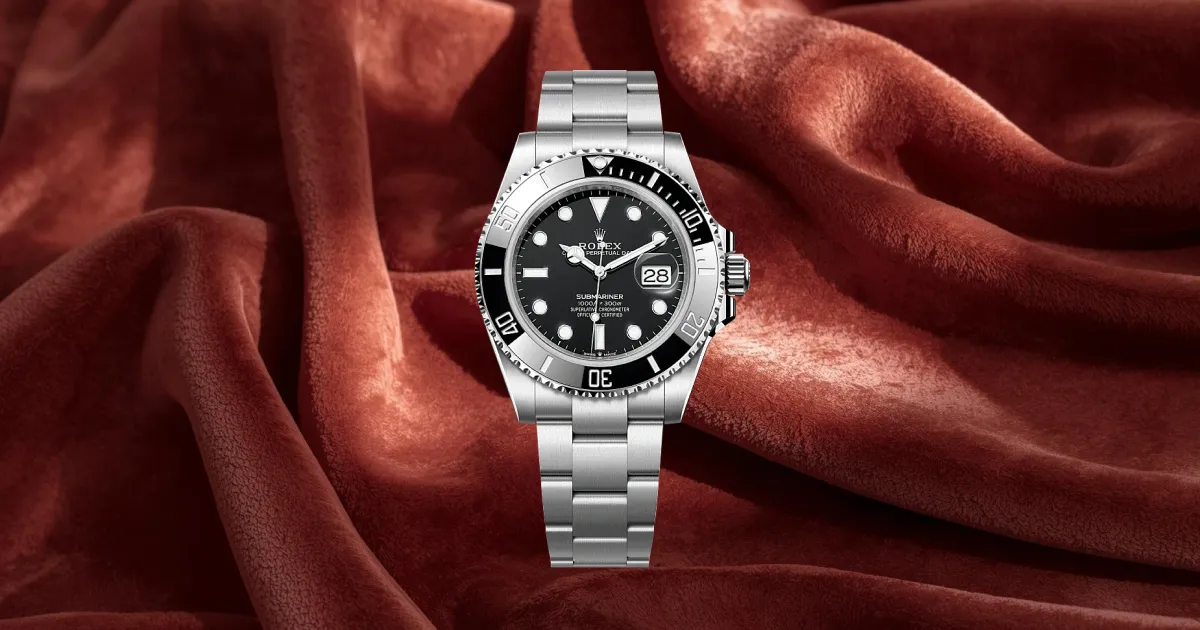
In Australia, people know all too well about the long waitlists for Rolex watches. Authorised dealers in Sydney, Melbourne, Brisbane, and Perth regularly have limited stock for in-demand references, particularly the Submariner, Daytona, and GMT-Master II. Building a genuine relationship with an authorised dealer is still the most reliable path to a new Rolex at retail price.
Cartier's retail availability is generally more straightforward. The brand operates boutiques in Australia's major cities and maintains stock of its core collections without the same level of scarcity. For buyers who want a luxury watch without the waiting game, this is a genuine advantage.
Pre-Owned Market in Australia
The Australian pre-owned watch market has grown substantially, with established dealers and auction houses offering authenticated pieces from both brands. Grey market pricing for Rolex sports models remains elevated, so buyers should do thorough research before purchasing outside the authorised network.
Key Considerations for Australian Buyers
Budget: Cartier entry-level models typically start lower than comparable Rolex entry points, making them accessible for first-time luxury watch buyers.
Investment intent: If your primary goal is value retention and resale performance, Rolex has a stronger and more consistent track record in the Australian secondary market.
Style preference: Cartier suits buyers who want design versatility and a jewellery-forward aesthetic; Rolex suits those who want a universally recognised, engineered precision instrument.
Availability: Cartier is generally easier to purchase without waiting, while Rolex requires patience for the most desirable references.
After-sales service: Both brands have authorised service centres in Australia, and maintaining service history significantly supports resale value for either brand.
Ultimately, neither brand is the wrong choice. The right one depends entirely on what you value most in a luxury watch.

Compare Watches Now
Cartier vs Rolex FAQs
Rolex generally holds its value more consistently than Cartier, particularly for its sought-after sports models like the Submariner and Daytona. These references frequently trade above their original retail price on the secondary market due to limited supply and persistent global demand.
Cartier watches can also retain solid value, especially vintage pieces, precious metal models, and limited editions. However, Cartier's overall resale performance is less predictable than Rolex, making Rolex the stronger choice if investment value is your primary concern.
Rolex has the edge in movement quality from a technical standpoint. All Rolex calibres are produced entirely in-house and certified as Superlative Chronometers, meeting accuracy standards beyond standard COSC certification.
Cartier produces some movements in-house, such as the 1847 MC, but also uses high-quality external calibres in parts of its range. Cartier's focus is on refined, reliable timekeeping rather than outperforming mechanical benchmarks. For most wearers the practical difference is minimal, but serious collectors give Rolex the nod on this criterion.
Cartier is genuinely both. The maison was founded in Paris in 1847 as a jeweller and rose to global fame crafting pieces for royalty and aristocracy across Europe. Watchmaking became a core part of the business in the early 1900s, with the Santos of 1904 widely considered one of the world's first wristwatches.
Today, Cartier is firmly recognised as a top-tier luxury watch brand alongside its jewellery heritage. The dual identity is actually part of its appeal, as Cartier watches carry an artistic and design sensibility that pure watchmaking brands rarely match.
Cartier is generally easier to purchase through authorised channels in Australia. The brand's boutiques in Sydney, Melbourne, and other major cities typically have available stock across its core collections, and you are unlikely to face significant waitlists for most references.
Rolex is notably harder to obtain at retail. Demand for popular sports models consistently outpaces supply at Australian authorised dealers, and building a relationship with a dealer over time is often the most practical route to securing a new watch at the recommended retail price.
Among Cartier's range, precious metal versions of the Tank and Santos tend to show the strongest long-term value retention. Vintage Tank Louis Cartier models in yellow gold, particularly those in excellent condition with original documentation, have attracted real collector attention and price appreciation at auction.
Limited edition and haute horlogerie pieces from Cartier also tend to hold value well due to their scarcity. For buyers focused on resale, it is worth prioritising precious metal references over steel, and seeking watches with complete service and purchase histories wherever possible.